

Premier League 2025/26 – Matchday 20

Why City Controlled the Game but Left With “Only” a Draw
Manchester City left Matchday 20 of the 2025/26 Premier League with a 1–1 draw against Chelsea, a result that may feel frustrating at first glance but becomes far more understandable once we look closely at how the game was played.
At the moment of this publication, Manchester City sit second in the league table, firmly in the title race, while Chelsea are fifth. This context matters: City approached the match as a team built to dominate games structurally, and for long stretches, that dominance was clear.
The issue was not control. It was conversion.
Rodri and a Circulation Model Built on Balance
From the data, Rodri recorded the highest load centrality of the match (0.08). This confirms his role as the main reference for City’s pass flow and positional balance. But the key insight lies in the interpretation of this number.
A maximum load centrality this low signals excellent collective distribution. City did not overload responsibility onto Rodri; instead, the circulation was evenly spread across the team. In fact, Chelsea’s own maximum value was slightly lower (0.07), reinforcing that City’s structure was not rigid or dependent on a single hub.
This collective responsibility extended to the back line. City’s center-backs showed strong load centrality values, underlining their active participation in build-up. They consistently stepped forward, attracted pressure, and helped City progress without rushing vertical passes. These were defenders functioning as structural midfielders in the first phase.


City’s Attacking Shape: Progression First, Width Always
City’s offensive behavior followed a clear positional logic.
The team prioritized progression and superation through the left flank, where combinations and support angles were designed to destabilize Chelsea’s block. That side was City’s main engine for advancing play.
When progression on the left was not available, City showed patience rather than forcing solutions. The ball was often switched toward Bernardo Silva, who maintained constant width on the right flank. His positioning stretched Chelsea horizontally and gave City a reliable outlet to reset attacks and re-enter the structure.
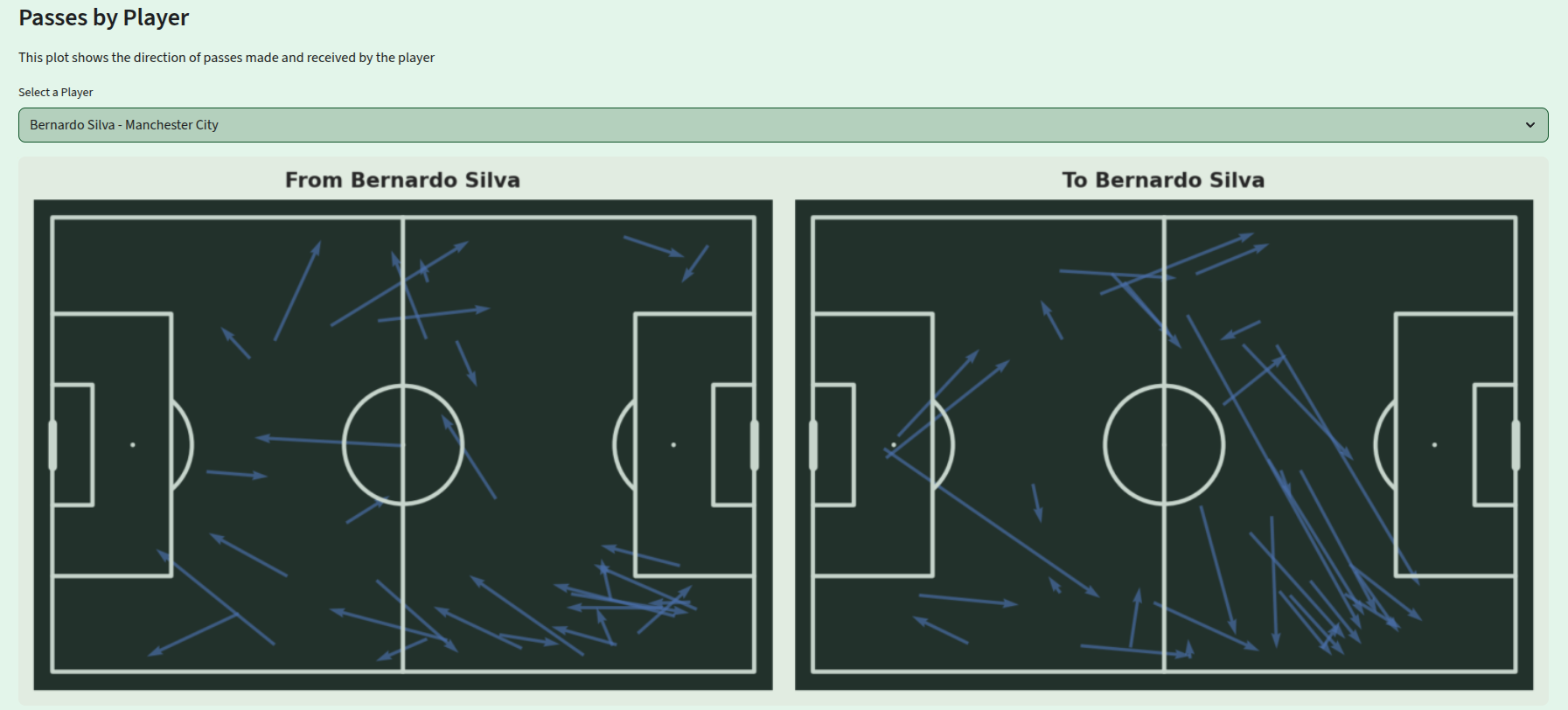
The images reinforce what the data indicates: City combined left-side progression with right-side amplitude, a classic positional-play mechanism to control space and tempo.


Positional Play and the Zone of Mutual Support
City’s positional game was evident throughout the match. The team consistently occupied the zone of mutual support, keeping distances short and ensuring multiple passing options around the ball.
For most of the game, City built with three players in the first line, while Chelsea initially pressed with two. This numerical advantage allowed City to circulate calmly, draw pressure, and progress into advanced zones with minimal risk.
Structurally, City had the game exactly where they wanted it.
Second Half: When Control Met Resistance
The dynamic shifted slightly midway through the second half. Chelsea adjusted their pressing by intermittently adding a third player to the high press or reinforcing the second line. This did not remove City’s control, but it did challenge their rhythm.
From that point onward, City began to show minor issues in the timing of their pressure, especially in the central corridor. The collective press remained organized, but it arrived just a fraction late on several occasions.
In this phase, Rayan Cherki became more involved, benefiting from marginally larger spaces between City’s lines. His increased participation did not overturn City’s dominance, but it did help Chelsea connect transitions more effectively.
City’s Pressing Logic: Control Over Chaos
Defensively, City followed a clear set of pressing rules. When Chelsea attempted to build from the back, City’s main trigger was the backward pass to the safety support. Aggressive pressing when the goalkeeper had the ball — in the intervention zone — was rare.
This approach reflected City’s preference for control over chaos. They prioritized maintaining structure rather than forcing high-risk presses. The trade-off was that when Chelsea escaped the first pressure wave, they could occasionally attack into moments where City’s defensive block was not fully set.
Dominance Without Proportional Threat
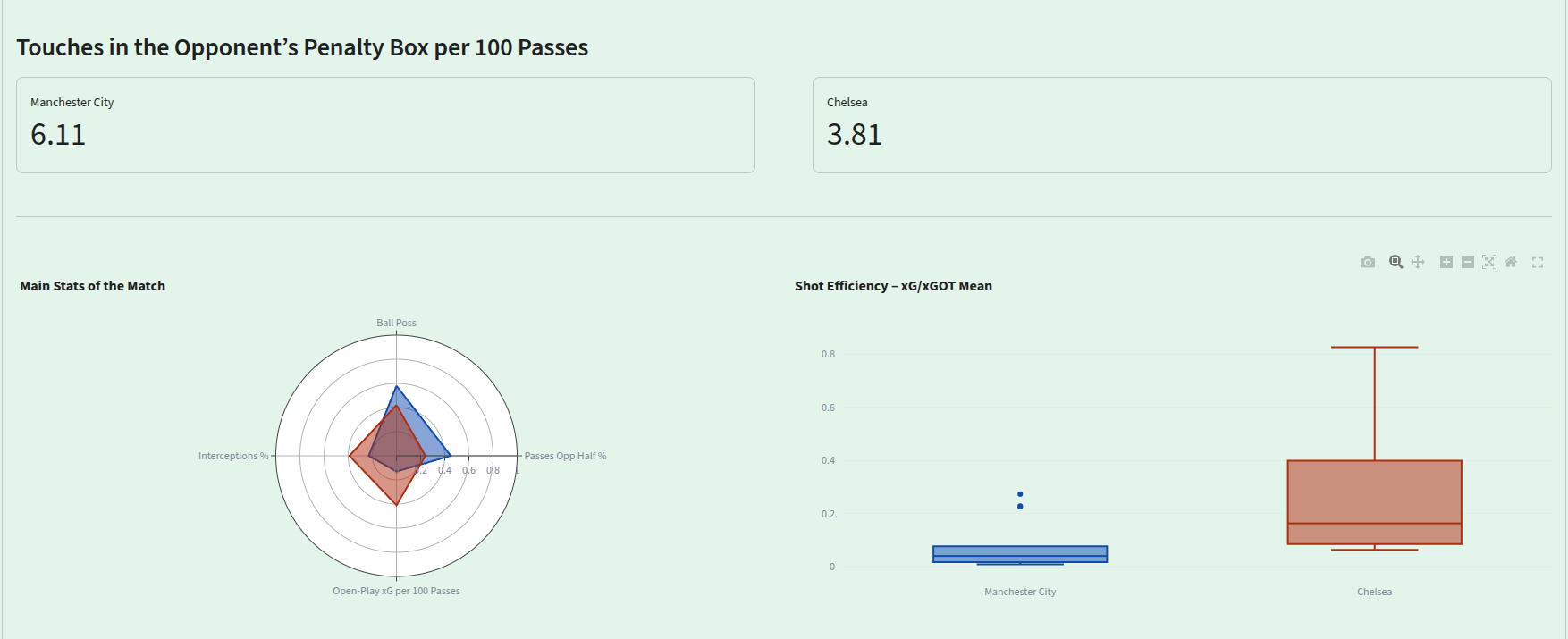
The most striking contrast of the match appears in the attacking efficiency numbers:
Manchester City: 0.13 open-play xG per 100 passes
Chelsea: 0.41 open-play xG per 100 passes
City dominated territory, possession, and structure. Chelsea, however, were more efficient in turning limited possession into danger. This disparity explains why a match largely controlled by City still ended level.
City created pressure; Chelsea created sharper moments.
Goals, Result, and Table Context
City’s goal emerged from sustained positional pressure and territorial dominance — a natural consequence of their structural superiority. Chelsea’s equalizer, on the other hand, came from moments where City’s pressure timing was slightly off, particularly through central spaces.
With the draw, Manchester City remain second in the Premier League, continuing to validate their control-based model over the long term. The result did not undermine their performance; it simply highlighted an area for refinement.
Final Thoughts: Control Is a Foundation, Not a Guarantee
From a City perspective, this match reinforced a familiar truth: dominating the structure of a game is a necessary condition for success, but not a sufficient one. The positional game worked. The circulation was balanced. The control was clear.
What was missing was sharper conversion relative to volume.
And if you enjoy analysis that explains why City control matches the way they do, subscribe to our newsletter. That’s where we break performances down with clarity, context, and calm.
Because for teams like Manchester City,
the details are where the season is decided.